
Sustanon 250 & Testosterone Replacement Therapy (TRT): The Complete Guide for Men Across the United States


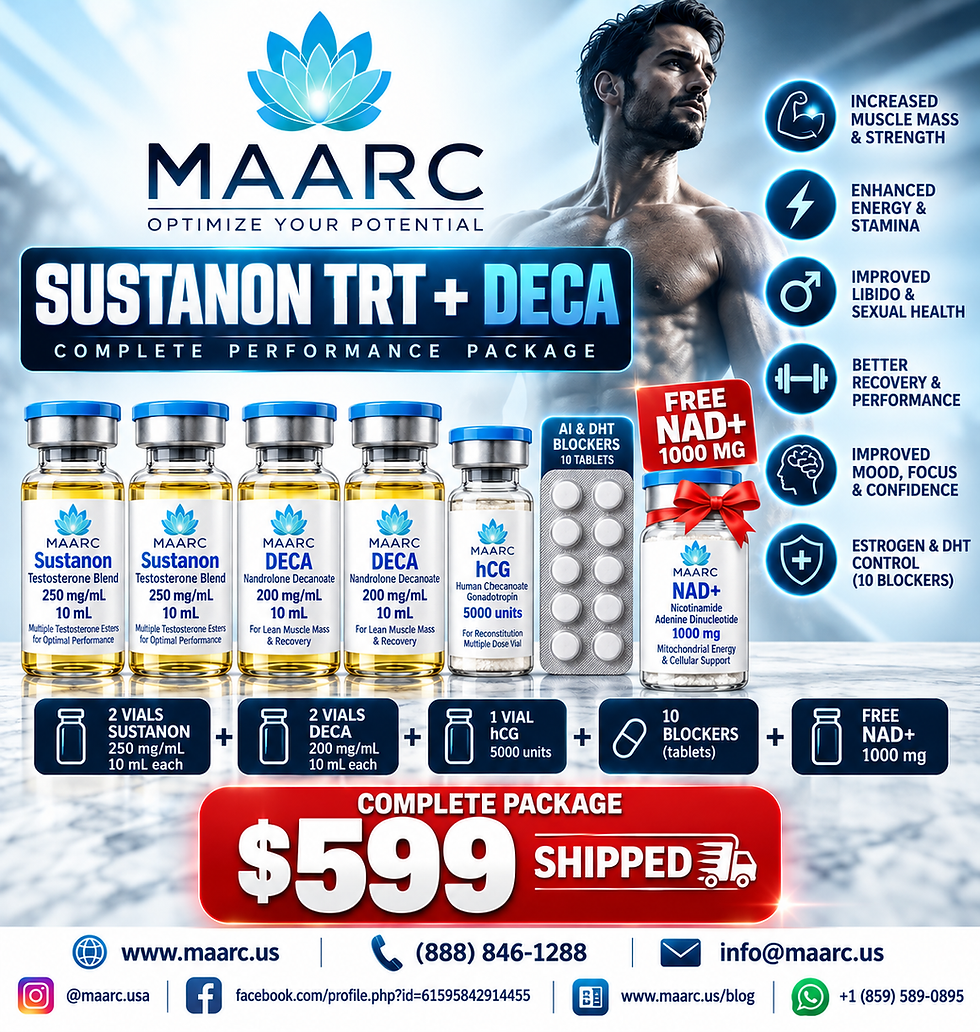
MAARC | Optimize Your Potential
Testosterone plays a vital role in men's health, influencing sexual function, muscle mass, bone density, red blood cell production, and overall well-being.
For men experiencing symptoms of testosterone deficiency, testosterone replacement therapy (TRT) may be an important treatment consideration following appropriate medical evaluation.
One testosterone formulation frequently discussed in international hormone therapy conversations is Sustanon 250, a blend of four testosterone esters.
In this guide, MAARC explores what Sustanon 250 is, how testosterone replacement therapy works, its potential benefits and risks, and what men across the United States should understand when researching TRT.
What Is Sustanon 250?
Sustanon 250 is an injectable testosterone formulation containing four different testosterone esters.
The traditional Sustanon 250 composition per milliliter includes:
Testosterone Propionate: 30 mg
Testosterone Phenylpropionate: 60 mg
Testosterone Isocaproate: 60 mg
Testosterone Decanoate: 100 mg
Total: 250 mg of testosterone esters per mL.
These esters have different absorption and release characteristics, allowing testosterone to enter the bloodstream over varying periods.
Sustanon 250 is used in certain international markets for testosterone replacement. However, Sustanon 250 itself is not an FDA-approved testosterone product in the United States. U.S. patients should discuss FDA-approved treatment options with licensed healthcare professionals.
What Is Testosterone Replacement Therapy?
Testosterone replacement therapy, commonly called TRT, is a medical treatment intended to restore testosterone levels in appropriately diagnosed patients with testosterone deficiency.
TRT may involve several formulations, including injectable testosterone, topical gels, patches, and other prescription delivery systems.
A medical diagnosis generally involves evaluating symptoms, medical history, and laboratory testing, typically including repeat morning testosterone measurements.
Common Symptoms of Low Testosterone
Men researching low testosterone treatment often report concerns such as:
Reduced sexual desire or libido
Persistent fatigue and reduced vitality
Decreased muscle mass
Changes in body composition
Reduced bone density
Changes in mood
Erectile dysfunction
Difficulty maintaining physical strength
These symptoms can have many causes. Experiencing them does not automatically mean that testosterone replacement therapy is necessary.
Potential Benefits of Medically Supervised TRT
For men with confirmed testosterone deficiency, appropriate treatment may offer meaningful improvements in specific symptoms.
1. Sexual Health and Libido
Testosterone replacement may improve sexual desire in some men with testosterone deficiency. Erectile dysfunction can have other underlying causes and may require separate evaluation.
2. Muscle Mass and Body Composition
Testosterone helps regulate lean muscle mass and body composition. TRT may improve lean mass in men with clinically low testosterone, although results vary.
3. Energy and Vitality
Some patients report improvements in energy and well-being following treatment. These benefits are not guaranteed, particularly when fatigue has other causes.
4. Bone Health
Testosterone contributes to maintaining bone mineral density. Restoring deficient testosterone levels may improve certain measures of bone health.
5. Mood and Quality of Life
Some men experience improvements in mood or depressive symptoms, although TRT is not a substitute for appropriate mental health treatment.
Sustanon 250 vs. Other Testosterone Formulations
Men researching Sustanon TRT often compare it with testosterone enanthate and testosterone cypionate.
Sustanon 250: A combination of four testosterone esters with different release profiles, used in certain countries outside the United States.
Testosterone Cypionate: A commonly prescribed injectable testosterone ester in the United States.
Testosterone Enanthate: Another testosterone ester used in prescription TRT, including FDA-approved formulations.
The most appropriate treatment depends on diagnosis, medical history, formulation availability, patient preferences, and clinician assessment.
No testosterone formulation should be assumed to be universally safer, stronger, or more effective for every patient.
Understanding TRT Risks and Medical Monitoring
Testosterone therapy requires individualized medical oversight.
Potential concerns include elevated hematocrit, acne, fluid retention, worsening of certain sleep-related conditions, changes in blood pressure, and suppression of natural testosterone and sperm production.
TRT may reduce fertility, sometimes substantially. Men planning to have children should discuss this before starting treatment.
Monitoring may include testosterone levels, blood counts, blood pressure, and prostate-related assessment when appropriate.
TRT Research Across All 50 U.S. States
Men across the United States research testosterone replacement therapy, testosterone deficiency, men's hormone health, and the differences between available testosterone formulations.
Whether researching TRT in Alabama, Alaska, Arizona, Arkansas, California, Colorado, Connecticut, Delaware, Florida, Georgia, Hawaii, Idaho, Illinois, Indiana, Iowa, Kansas, Kentucky, Louisiana, Maine, Maryland, Massachusetts, Michigan, Minnesota, Mississippi, Missouri, Montana, Nebraska, Nevada, New Hampshire, New Jersey, New Mexico, New York, North Carolina, North Dakota, Ohio, Oklahoma, Oregon, Pennsylvania, Rhode Island, South Carolina, South Dakota, Tennessee, Texas, Utah, Vermont, Virginia, Washington, West Virginia, Wisconsin, or Wyoming, patients should seek appropriately licensed medical professionals and legally authorized medications.
Medical licensing, prescribing requirements, and access to telehealth services may differ by state.
Mentioning a state in this guide does not indicate that MAARC offers treatment, prescriptions, or medication delivery there.
Testosterone Replacement Therapy in 50 Major U.S. Cities
Interest in men's hormone health extends across major metropolitan areas.
Patients researching testosterone therapy may search for educational resources and qualified clinicians in:
Northeast and Mid-Atlantic: New York City, Buffalo, Philadelphia, Pittsburgh, Boston, Providence, Newark, Jersey City, Baltimore, Washington, D.C.
Southeast: Miami, Orlando, Tampa, Jacksonville, Atlanta, Charlotte, Raleigh, Nashville, Memphis, Louisville, New Orleans, Birmingham, Richmond.
Midwest: Chicago, Detroit, Columbus, Cleveland, Cincinnati, Indianapolis, Milwaukee, Minneapolis, St. Paul, Kansas City, St. Louis, Omaha, Wichita.
South and Southwest: Houston, Dallas, Fort Worth, Austin, San Antonio, Oklahoma City, Phoenix, Tucson, Albuquerque, El Paso.
West and Pacific: Los Angeles, San Diego, San Jose, San Francisco, Seattle, Portland, Denver, Las Vegas.
Regardless of location, patients should verify a clinician's credentials and confirm that any prescribed testosterone product is legally authorized and obtained through a legitimate pharmacy.
Frequently Asked Questions About Sustanon and TRT
Is Sustanon 250 the same as TRT?
No. Sustanon 250 is a particular testosterone formulation. TRT is the broader medical treatment of testosterone deficiency and can involve several different medications.
Is Sustanon 250 FDA-approved in the United States?
No. Sustanon 250 is not an FDA-approved product in the United States. FDA-approved testosterone formulations are available for eligible patients.
How long does testosterone replacement therapy take to work?
The timing of treatment response varies by symptom, formulation, and individual factors. Some changes may be noticed within weeks, while others take several months.
Does TRT increase muscle mass?
In men with testosterone deficiency, TRT may improve lean muscle mass. Prescription testosterone therapy should not be used solely for bodybuilding or athletic enhancement.
Does TRT improve libido?
TRT may improve sexual desire in some men with diagnosed testosterone deficiency. Results depend on individual circumstances and other medical factors.
Can TRT affect fertility?
Yes. Exogenous testosterone can suppress sperm production. Fertility planning should be discussed with a healthcare professional before treatment.
Is TRT available in every U.S. state?
Licensed clinicians can evaluate patients for testosterone deficiency throughout the United States, but treatment options, prescribing requirements, and telehealth rules vary by state and provider.
What tests are needed before starting TRT?
A clinician may order repeat morning testosterone measurements and other tests to investigate possible causes of deficiency and assess treatment safety.
MAARC — Optimize Your Potential
At MAARC, our focus is helping readers better understand men's health, hormone-related topics, and testosterone therapy considerations.
Knowledge is an important first step toward making informed healthcare decisions.
Explore our educational content and connect with MAARC through our online channels.
Website: https://www.maarc.us
Instagram: https://www.instagram.com/maarc.usa/
Phone: (888) 846-1288
Email: info@maarc.us
MAARC — OPTIMIZE YOUR POTENTIAL
Medical disclaimer: This article is provided for general educational purposes and is not medical advice. Testosterone therapy requires individualized assessment by a qualified healthcare professional. Prescription medications must be obtained through lawful, appropriately regulated channels.
Alabama | Testosterone replacement therapy in Alabama |
Alaska | Low testosterone diagnosis and TRT in Alaska |
Arizona | Testosterone therapy options in Arizona |
Arkansas | Men's hormone health and TRT in Arkansas |
California | Testosterone replacement therapy in California |
Colorado | Low testosterone testing and TRT in Colorado |
Connecticut | Testosterone deficiency treatment in Connecticut |
Delaware | Men's testosterone health in Delaware |
Florida | Testosterone replacement therapy in Florida |
Georgia | Low testosterone treatment options in Georgia |
Hawaii | Testosterone therapy and men's health in Hawaii |
Idaho | TRT medical evaluation in Idaho |
Illinois | Testosterone replacement therapy in Illinois |
Indiana | Low testosterone symptoms and TRT in Indiana |
Iowa | Testosterone deficiency testing in Iowa |
Kansas | Testosterone therapy information in Kansas |
Kentucky | TRT and men's hormone health in Kentucky |
Louisiana | Testosterone replacement therapy in Louisiana |
Maine | Low testosterone diagnosis in Maine |
Maryland | TRT treatment considerations in Maryland |
Massachusetts | Testosterone replacement therapy in Massachusetts |
Michigan | Testosterone deficiency treatment in Michigan |
Minnesota | Men's hormone health and TRT in Minnesota |
Mississippi | Low testosterone evaluation in Mississippi |
Missouri | Testosterone replacement therapy in Missouri |
Montana | TRT medical monitoring in Montana |
Nebraska | Testosterone therapy and men's health in Nebraska |
Nevada | Testosterone replacement therapy in Nevada |
New Hampshire | Low testosterone testing in New Hampshire |
New Jersey | Testosterone replacement therapy in New Jersey |
New Mexico | Testosterone deficiency and TRT in New Mexico |
New York | Testosterone replacement therapy in New York |
North Carolina | Men's hormone health in North Carolina |
North Dakota | Low testosterone treatment in North Dakota |
Ohio | Testosterone replacement therapy in Ohio |
Oklahoma | Testosterone deficiency diagnosis in Oklahoma |
Oregon | TRT and men's health in Oregon |
Pennsylvania | Testosterone replacement therapy in Pennsylvania |
Rhode Island | Low testosterone and TRT in Rhode Island |
South Carolina | Testosterone therapy information in South Carolina |
South Dakota | Men's testosterone health in South Dakota |
Tennessee | Testosterone replacement therapy in Tennessee |
Texas | Low testosterone testing and TRT in Texas |
Utah | Testosterone therapy and men's health in Utah |
Vermont | TRT medical evaluation in Vermont |
Virginia | Testosterone replacement therapy in Virginia |
Washington | Testosterone deficiency treatment in Washington |
West Virginia | Low testosterone and TRT in West Virginia |
Wisconsin | Testosterone replacement therapy in Wisconsin |
Wyoming | Testosterone therapy considerations in Wyoming |
Testosterone Replacement Therapy in 50 Major U.S. Cities
People researching TRT in major American cities often want information about testosterone blood testing, symptoms of testosterone deficiency, the differences between injectable formulations, treatment risks, and finding licensed healthcare professionals.
City | Educational search topic |
New York City, NY | Testosterone replacement therapy New York City |
Los Angeles, CA | Low testosterone evaluation Los Angeles |
Chicago, IL | TRT treatment information Chicago |
Houston, TX | Testosterone replacement therapy Houston |
Phoenix, AZ | Low testosterone testing Phoenix |
Philadelphia, PA | Testosterone deficiency treatment Philadelphia |
San Antonio, TX | TRT medical evaluation San Antonio |
San Diego, CA | Testosterone replacement therapy San Diego |
Dallas, TX | Low testosterone symptoms Dallas |
Jacksonville, FL | Testosterone therapy information Jacksonville |
Fort Worth, TX | Men's hormone health Fort Worth |
San Jose, CA | TRT treatment considerations San Jose |
Austin, TX | Testosterone replacement therapy Austin |
Charlotte, NC | Low testosterone testing Charlotte |
Columbus, OH | Testosterone deficiency treatment Columbus |
Indianapolis, IN | TRT medical monitoring Indianapolis |
San Francisco, CA | Testosterone replacement therapy San Francisco |
Seattle, WA | Low testosterone evaluation Seattle |
Denver, CO | Testosterone therapy information Denver |
Oklahoma City, OK | TRT treatment considerations Oklahoma City |
Nashville, TN | Testosterone replacement therapy Nashville |
Washington, DC | Low testosterone diagnosis Washington DC |
El Paso, TX | Men's hormone health El Paso |
Las Vegas, NV | Testosterone replacement therapy Las Vegas |
Boston, MA | Testosterone deficiency testing Boston |
Portland, OR | TRT medical evaluation Portland |
Detroit, MI | Testosterone replacement therapy Detroit |
Louisville, KY | Low testosterone treatment Louisville |
Memphis, TN | Testosterone therapy information Memphis |
Baltimore, MD | Testosterone replacement therapy Baltimore |
Milwaukee, WI | Low testosterone testing Milwaukee |
Albuquerque, NM | Testosterone deficiency Albuquerque |
Tucson, AZ | TRT medical evaluation Tucson |
Fresno, CA | Testosterone replacement therapy Fresno |
Sacramento, CA | Low testosterone symptoms Sacramento |
Mesa, AZ | Testosterone therapy considerations Mesa |
Kansas City, MO | Testosterone replacement therapy Kansas City |
Atlanta, GA | TRT and men's hormone health Atlanta |
Omaha, NE | Low testosterone diagnosis Omaha |
Colorado Springs, CO | Testosterone therapy information Colorado Springs |
Raleigh, NC | Testosterone replacement therapy Raleigh |
Miami, FL | Low testosterone evaluation Miami |
Virginia Beach, VA | Testosterone deficiency treatment Virginia Beach |
Long Beach, CA | TRT medical monitoring Long Beach |
Oakland, CA | Testosterone replacement therapy Oakland |
Minneapolis, MN | Low testosterone testing Minneapolis |
Tampa, FL | Testosterone therapy information Tampa |
New Orleans, LA | Testosterone replacement therapy New Orleans |
Cleveland, OH | Low testosterone symptoms Cleveland |
Pittsburgh, PA | Testosterone deficiency and TRT Pittsburgh |
Recommended title: Sustanon 250 & TRT Across All 50 U.S. States: Testosterone Therapy Guide
Meta description: Explore Sustanon 250, testosterone replacement therapy, low testosterone, and TRT medical considerations across all 50 U.S. states and 50 major cities.
Suggested slug: /blog/sustanon-250-trt-50-states-usa
I recommend publishing this as a nationwide educational resource, rather than creating 100 nearly identical location pages. Google's search spam policies warn that location-targeted pages created mainly to capture similar searches may be treated as doorway abuse.
Google for Developers
For stronger SEO, individual state or city articles should provide genuinely distinct information—such as verified state prescribing rules, licensed provider resources, or actual MAARC services where applicable.


Comments